
Flat Shoelace RFQs: Separate Weave References
When comparing the crossover and non-crossing flat shoelaces in Jiaying’s catalogue, keep each name linked to its own product page and supplier-confirmed sample. Ask the supplier to mark the surface appearance it proposes and identify the corresponding sample revision. The buying decision is which submitted lace reference matches the enquiry; the catalogue names alone do not provide a complete technical weaving specification.
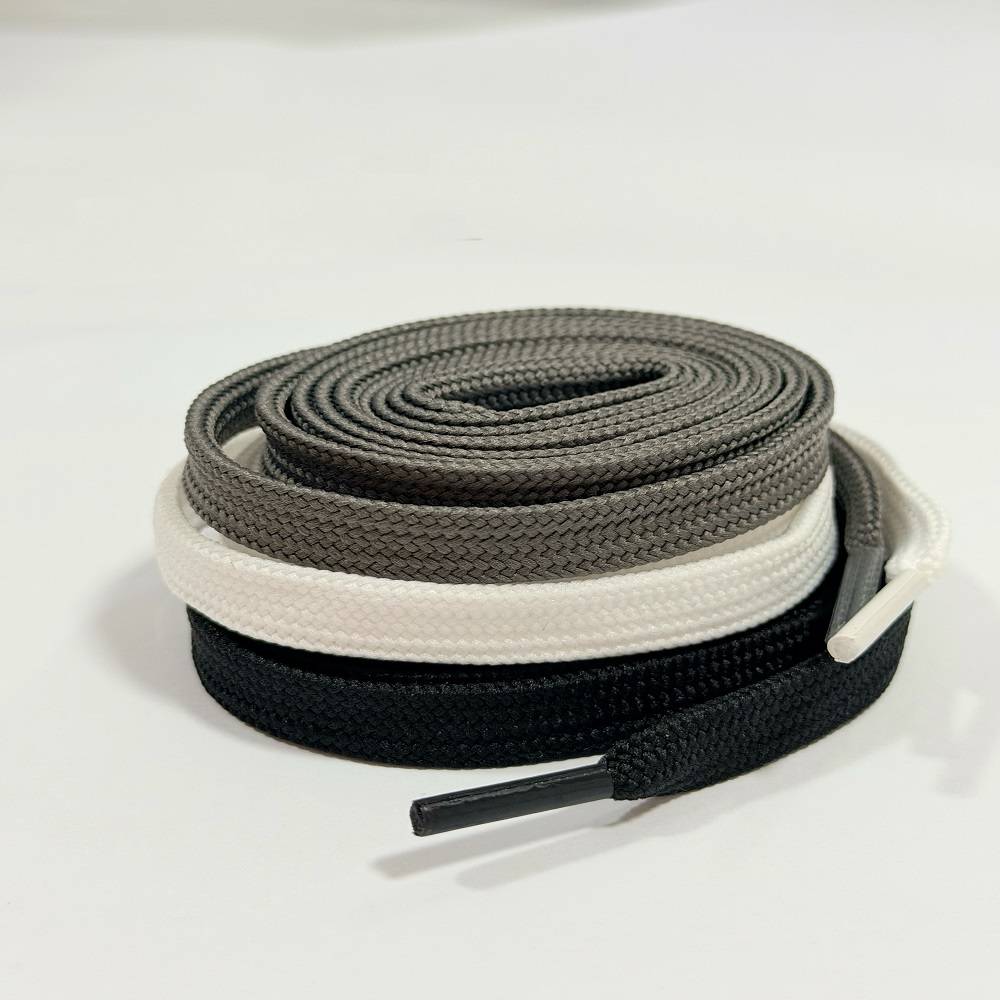
The non-crossing product page shows these flat-lace catalogue appearances. The photograph identifies a reference; it does not independently establish a technical weaving method or a supplied colour assortment.
Preserve the two catalogue identities
The crossover product page uses Flat Double-Layer Braided Crossover in its title. The non-crossing page uses Flat Double-layer Woven Non-crossing. Keep those source descriptions in separate enquiry rows rather than shortening both to an unnamed flat lace.
Both pages declare Polyester, a 60CM–210CM size range and pair/meter units. These shared fields do not resolve the difference between the two catalogue references. Link each row to its page and selected image, then ask the supplier for its own offered product or sample identifier. If no existing code is supplied, retain a mutually understood image reference for the discussion.
Buying field
Requested supplier response
Catalogue identity
Crossover or non-crossing page and original description
Offered lace reference
Supplier product code or confirmed sample identifier
Appearance submission
Marked face and edge views for the proposed sample
Material description
Supplier declaration tied to that product row
Decision and revision
Accepted reference or an identified change request
Ask for a reference that shows the proposed appearance
Request a clear sample image showing the broad face of the flat lace and a corresponding edge reference where the supplier can identify the proposed construction. If the two faces differ, ask for each face to be labelled. Keep the views together under one sample identifier so they are not mistaken for unrelated products.
Mark the feature the buyer wants the supplier to identify, such as the visible surface pattern or edge appearance. Ask the supplier to describe its correspondence to the catalogue term. This creates a practical sample comparison without the buyer inventing a technical weave name from a small image. A reference photograph can identify appearance while leaving production-method details for a separate supplier response.
Separate crossover product reference. Keep the supplier’s accepted sample identity beside its own product page rather than treating both catalogue names as one construction.
Separate a catalogue name from technical construction
Retain crossover and non-crossing as the supplier’s catalogue labels until the supplier explains their meaning for the offered laces. Do not convert the words into a particular machine process, yarn path or verified cross-section. If the enquiry requires a technical construction specification, ask for that specification explicitly and link it to the same submitted sample.
Likewise, the title’s double-layer wording is not a measured layer drawing. Ask the supplier which construction it proposes and what supporting reference identifies it. Keep an unanswered technical field open rather than completing it with assumptions. The same boundary applies to performance wording: this comparison does not establish knot security, durability, colourfastness or compatibility with a particular shoe.
Control colour and finish within the accepted reference
The polyester-labelled pages name black, white, gray and beige, with other colours described as customizable. Select the desired colour reference and ask which sample represents the proposed version. A gallery containing several colours is an appearance display, not a confirmed package or an agreed order assortment.
Keep the accepted texture reference beside the selected colour. If the supplier proposes a different appearance for a requested colour, identify that as a separate submission. The buyer can then decide on the returned version without silently applying an approval from one product row to another. Leave any commercial availability or customization proposal to the supplier’s actual offer.
The separate cotton-named product page declares Cotton Yarn. This appearance is not evidence that the two polyester-labelled crossover and non-crossing products share its material or construction.
Keep other lace families on their own rows
The catalogue also has a separate cotton-named flat lace whose material field states Cotton Yarn. Use it as a distinct product reference. Its title or appearance should not change the Polyester declaration attached to the crossover and non-crossing pages.
If several lace families are submitted together, give each a separate sample identifier and keep the material description with that identifier. Ask the supplier to label alternatives clearly. This allows purchasing to compare proposed products without mixing the accepted appearance of one lace with the declared material or construction description of another.
Record the supplier’s response and the buyer’s decision
A focused request can say: “Please identify the offered sample corresponding to each linked crossover or non-crossing reference. Return marked face and edge views, your product or sample identifier and the construction description you propose. Identify any difference from the selected catalogue appearance and keep alternatives on separate rows.”
Review the returned sample against the named reference and record accepted, change requested or information required. Keep the supporting views with the decision and identify any later revision before an earlier approval is reused. This closes a specific product-identity question while leaving length endpoints, quotation units and supplied tip assemblies in their own purchasing records.
Buyer FAQ
Do crossover and non-crossing identify proven technical weave methods?
They are the reviewed catalogue labels. Request the supplier’s construction description if a technical specification is needed; the article does not verify a manufacturing method.
Why keep two rows when both pages state Polyester?
The common material declaration does not establish that the proposed surface appearance or construction is identical. Bind each offered sample to its own catalogue reference.
What should the sample reply include?
Request the product reference, sample revision, labelled appearance views and the supplier’s corresponding description. Keep any proposed alternative separately identified.
Keep both catalogue labels traceable.
Connect appearance views to one named sample.
Approve the returned product reference explicitly.
wholesale flat double-layer woven non-crossing versatile work shoes casual sneakers shoe lacesB2B supplier sample record